You spend close to a third of your life on your mattress, which gives it an outsized say in how you feel during the other two-thirds. Yet most of us hold onto a mattress far longer than we should, usually because the decline is so gradual that we stop noticing it. If you have been waking up less rested than you would like or reaching for the coffee a little earlier than you used to, your bed may be quietly working against you.
The short version: most mattresses last about 7 to 10 years, and the clearest signs you need a new one include waking up sore, visible sagging, restless nights, sleeping better away from home, and comfort needs that have simply changed over time. Below, our sleep specialists walk through each one and how to tell when it is worth making a change.
Disclaimer: The information on this site is not intended or implied to be a substitute for professional medical advice, diagnosis, or treatment. If you suffer from any symptoms or diagnoses we discuss, please consult your physician prior to making any decisions.
How Long Does a Mattress Last?
As a general rule, a quality mattress lasts about 7 to 10 years, though the real number depends on how it is built, how well it is cared for, and who is sleeping on it. Innerspring beds tend to sit at the shorter end of that range, while well-made hybrids and higher-density foams often last longer. Two people sharing a bed nightly will naturally see more wear than a lightly used guest room mattress. The calendar is a useful starting point, but it is not the whole story. How you feel when you wake up tells you more than the year on the receipt, which is why the signs below matter more than any single number.
7 Signs You Need a New Mattress
- You Wake Up Stiff, Sore, or Achy: One of the most telling signs is waking up more uncomfortable than when you went to bed, with stiffness that eases as the day goes on. When a mattress loses its support, your spine is no longer held in healthy alignment overnight, and your body feels it by morning. Occasional soreness happens to everyone, but a consistent pattern is worth paying attention to. If discomfort or pain persists, it is always wise to check in with a healthcare professional as well.
- You Sleep Better Away From Home: If you consistently sleep better in a hotel or a guest room than in your own bed, your mattress is very likely the variable. A good night's sleep somewhere else is one of the clearest signals that the mattress you own is no longer doing its job.
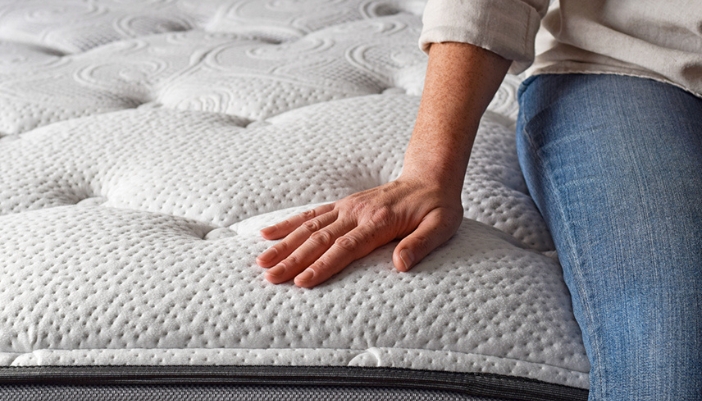
- You Can See or Feel It Sagging: Visible sagging, permanent body impressions, lumps, or a hammock-like dip in the middle all point to a support system that has broken down. Run your hand across the surface and look at it from the side. Noticeable dips or uneven spots mean the coils or foam are no longer springing back, and no amount of rotating will bring that support back for good.
- It Is Between 7 and 10 Years Old: If you cannot remember when you bought your mattress, that is often an answer in itself. Once a mattress passes the 7-to-10-year mark, materials have usually softened and compressed enough that support and comfort have quietly declined, even if nothing looks obviously wrong. Age alone is not a reason to replace a bed you still love, but it is a good reason to start paying closer attention.
- Your Sleep Is Restless and Interrupted: Tossing, turning, and waking through the night can be a sign your mattress no longer keeps you comfortable. Older beds also transfer more motion, so you feel every time your partner shifts or gets up. If either of you is waking the other simply by moving, newer constructions that isolate motion can make a noticeable difference.
- You Wake Up Too Warm: Sleeping hot is not always about the thermostat. Older foams tend to trap heat and hold it against your body through the night. If you find yourself kicking off the covers or waking up overheated, today's cooling materials and more breathable hybrid designs are built specifically to sleep cooler.
- Your Needs Have Changed: The bed that suited you five years ago may not suit the you of today. A new partner, a different preferred sleep position, a change in weight, or a new focus on recovery can all shift what your body needs from a mattress. Allergies matter too, since older mattresses gradually accumulate dust and allergens that can make sensitive sleepers miserable. When your life changes, it is reasonable for your mattress to change with it.

What to Do When It Is Time
The good news is that you do not have to guess your way through it. The right next mattress comes down to matching support, comfort, and temperature to how you actually sleep. Innerspring, hybrid, and memory foam beds each feel and perform differently, firmness should follow your primary sleep position, and an adjustable base can be a genuine upgrade for anyone dealing with comfort or mobility changes. The one thing a screen cannot do is let you feel the difference, which is exactly why lying on a mattress in person still matters. You can start by exploring our mattress collection and the range of mattress types we carry, then come test the ones that interest you. If your needs have shifted, it is worth looking at adjustable bases as well.
Start With Garner's Sleep Specialists
Choosing a mattress is personal, and it is a decision worth making with someone who knows the products and knows the right questions to ask. At our Garner and North Raleigh showrooms, our sleep specialists help you match support, comfort, and temperature regulation to the way you really sleep. You can compare hybrids, memory foam, and adjustable bases side by side from trusted brands like Serta and Beautyrest. Our goal is never to rush you toward the fastest sale. It is to help you find the mattress that has you waking up genuinely rested. If your current mattress is checking one or more of the boxes above, come in and let our team help you sleep better.

Frequently Asked Questions
Most quality mattresses last about 7 to 10 years. The exact lifespan depends on the type of mattress, the quality of its materials, and how much it is used. Beds that are slept on nightly by two people wear faster than lightly used ones, so how the mattress feels matters more than age alone.
A common clue is waking up stiff or sore and then feeling better as the day goes on, which can point to a mattress that is no longer supporting your spine overnight. That said, ongoing back pain has many possible causes, so if it persists, it is best to speak with a healthcare professional.
For many people, yes. A mattress that offers the right support and temperature for how you sleep can reduce tossing and turning and help you wake up more rested. The key is matching the mattress to your body and sleep style, which is where testing in person and expert guidance help most.
It is worth evaluating your mattress around the 7-to-10-year mark, and sooner if you notice sagging, restless sleep, or morning aches. If several of the signs above sound familiar, that is usually the moment to start shopping.
Garner Appliance & Mattress has been family-owned in North Carolina's Triangle since 1977, pairing the region's leading appliance and mattress brands with genuine expertise and full-service delivery and installation. Our showrooms are made for hands-on shopping, with knowledgeable specialists who help you find the right fit for how you live. Visit us at our Garner or North Raleigh showroom, or reach out to start the conversation.